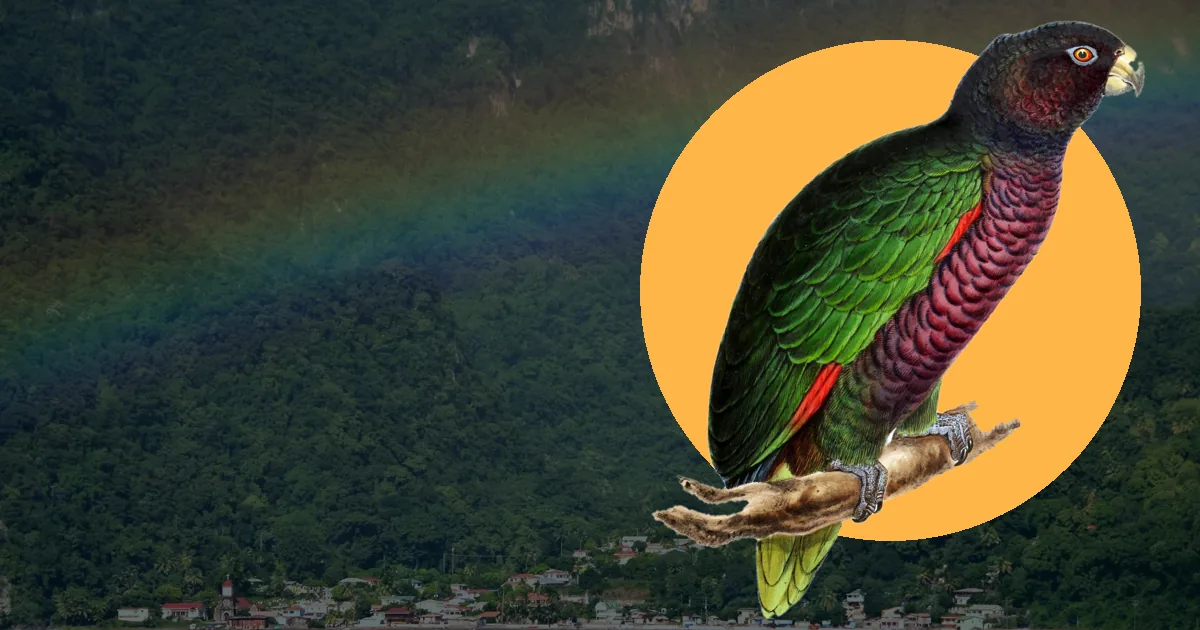
Is the Sisserou parrot endangered? Yes: the Sisserou (Amazona imperialis), Dominica’s national bird, is listed as critically endangered, and a 2019 estimate counted only about 50 mature individuals in the wild. It lives nowhere else on Earth, which makes protecting its mountain forest a matter of national pride.
This guide explains the bird’s status, the threats and what travellers can do. It expands our Sisserou page and links to our things to do guide.
How endangered is the Sisserou?
The species is described as critically endangered, the highest threat category before extinction in the wild. The 2019 estimate of about 50 mature individuals is small, and the bird breeds slowly: a pair typically raises one chick every other year. The first successful breeding in captivity was in 2011, and the species has the lowest reproductive potential of any Amazona parrot.
Sisserou parrot facts at a glance
| Fact | Detail |
|---|---|
| Scientific name | Amazona imperialis |
| Length | About 48 cm |
| Appearance | Dark purple chest, dark green upper parts with black-edged feathers |
| Habitat | Mountain forest, mostly 600 to 1,300 metres |
| Nesting | February to April; two white eggs, incubated for 26–28 days |
| Status | Critically endangered |
What threatens the Sisserou?
Hurricanes are a major cause of decline: Hurricane David in 1979 and Hurricane Maria in 2017 damaged its habitat. Other threats include forest disturbance and logging, trapping for food and the pet trade, plantation development and competition for nest cavities with red-necked amazons and owls. Predators include the Dominican boa, broad-winged hawks, opossums and rats.
Where can you see the Sisserou?
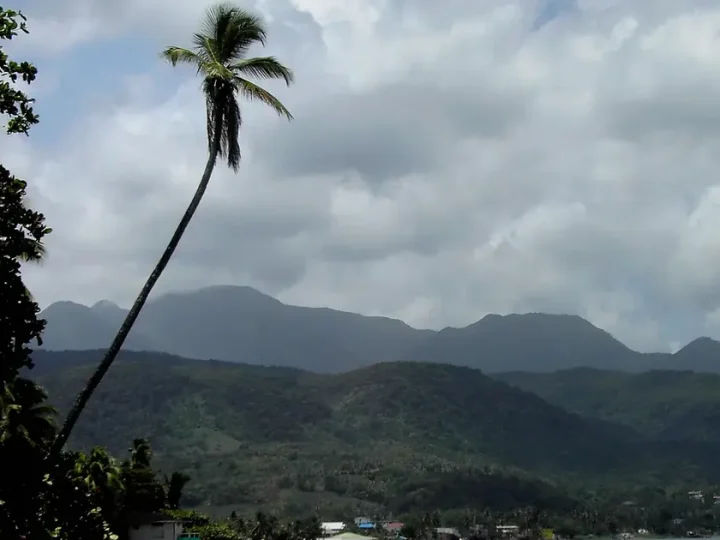
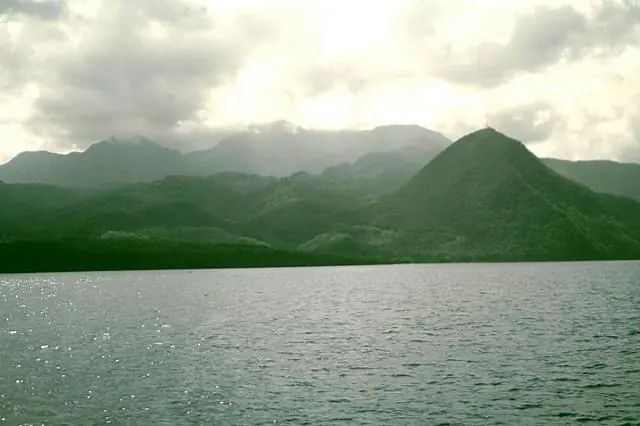
The bird is shy and well camouflaged, usually seen in groups of three or fewer. It frequents the slopes of Morne Diablotin in the north, and a small population has been reintroduced in Morne Trois Pitons National Park. The Syndicate Nature Trail, a loop of about 1.6 km in the Syndicate Parrot Preserve, is popular with birdwatchers, and the Jaco, or red-necked amazon, is easier to meet than the Sisserou. Go with a local guide and expect to listen as much as look.
What is being done to protect it?
The Forestry, Wildlife and Parks Division works with partners such as the Rare Species Conservation Foundation, and forest reserves protect parts of its range. The Parrot Conservation and Research Centre operates from the Roseau Botanic Gardens. Education programmes have reduced the local bird trade, and visitor spending on guided forest trips supports the people who care for the forest.
Frequently Asked Questions
Yes. It is listed as critically endangered, and a 2019 estimate counted only about 50 mature individuals in the wild. It breeds slowly and its mountain forest habitat has been damaged by hurricanes, so conservation work continues across the island.
It is the national bird and appears on the flag adopted on 3 November 1978, the year of independence. It is one of the few national flags that includes purple, and the parrot is a symbol of the island’s identity and its natural heritage.
Rarely. It lives in high mountain forest and is shy, so a guided walk in Morne Diablotin National Park or the Syndicate area gives the best chance. Sightings cannot be promised, and the Jaco is much easier to find on the same trails.
The Sisserou is larger, about 48 cm long, with a dark purple chest and dark green upper parts. The Jaco, or red-necked amazon, is about 40 cm and mostly green with orange and red at the throat. Both are found only in Dominica.
Read more Dominica island guides in the journal.
How we prepared this guide: Main sources: imperial amazon. The facts come from Wikipedia’s articles on the imperial amazon, the red-necked amazon, Morne Diablotin National Park, the Syndicate Nature Trail, the Dominica Botanic Gardens and the flag of Dominica. We would value a review by a conservation specialist. Photographs are from Wikimedia Commons; see our photo credits.