Dominica's culture is layered: Kalinago heritage, African roots, French and British colonial history, all in a small island. The signs are everywhere, in the language, on the plate and in the music.
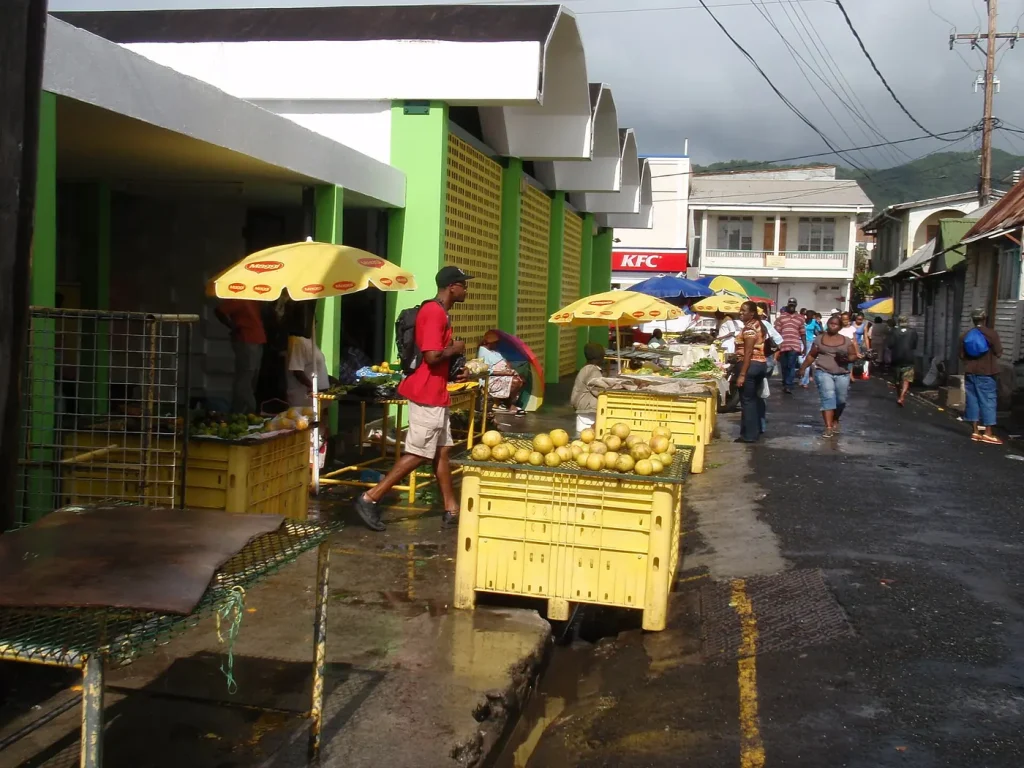
Eat like the island
Dominican food leans on local produce: root vegetables, fruit, fish and the spices of Creole cooking. Visit the Roseau market for fruit, vegetables and local products, and ask where the locals eat. Many places are small and informal. We do not list prices, and menus change with the harvest and the catch.
Listen
Music is a major part of life here. In 1973 the band Exile One, founded by Gordon Henderson, created a style called cadence-lypso, which helped lay the ground for modern Creole music. Other styles include jing ping. Since 1997 the island has also held weeks of Creole festivals such as Creole in the Park and the World Creole Music Festival. Independence is celebrated every year on 3 November, the date Dominica became independent in 1978.
Speak
English is the official language, and Dominican Creole, Kwéyòl, is widely spoken. It is based on French, a legacy of the French settlers and enslaved Africans brought to the island from 1690.
Visiting the Kalinago Territory
The Kalinago Territory is a district of about 15 km² on the east coast, set up for the island's Indigenous people. If you visit, go with community-run tours and shops where possible, ask before taking photos, and buy crafts directly from makers.