Animals in Dominica range from tiny lizards to one of the world’s largest frogs. The island has around 200 bird species, a group of sperm whales offshore and several reptiles and amphibians found nowhere else, so a nature trip here is as much about small, shy animals as dramatic views.
This guide covers the island’s land animals beyond birds, with a short note on safety. For parrots see our Sisserou guide, and for the island as a whole see things to do.
Which animals live in Dominica?
| Animal | Why it matters |
|---|---|
| Dominican anole | A small lizard found only on Dominica, common in many habitats |
| Dominican ground lizard | A second endemic lizard |
| Dominican boa | An endemic snake that eats rodents, bats, iguanas and sometimes hens |
| Lesser Antillean iguana | Critically endangered, with Dominica as its last major stronghold |
| Mountain chicken (crapaud) | One of the world’s largest frogs, critically endangered |
| Sperm whales | A group lives in the waters off the coast all year |
What lizards and snakes are on the island?
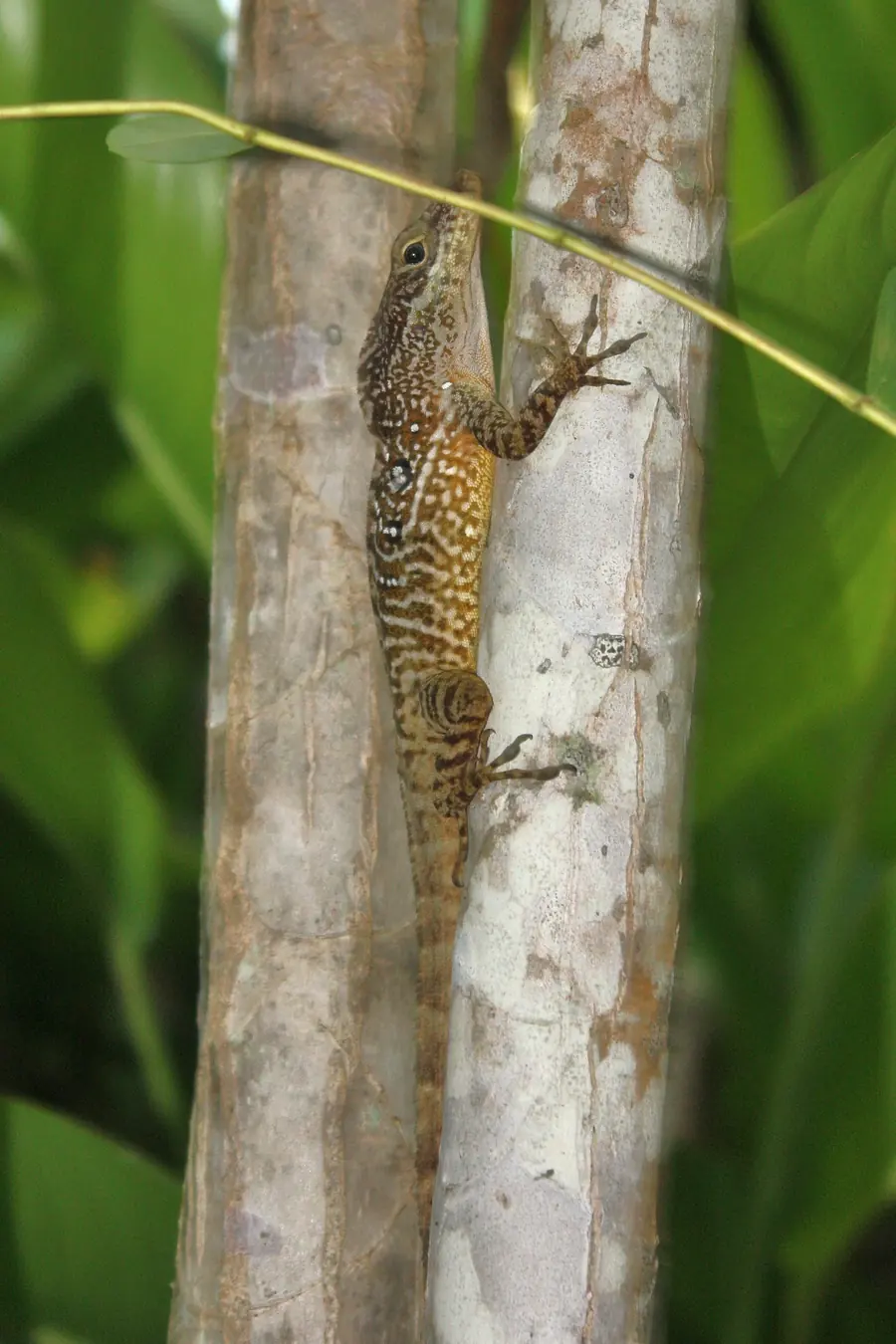
Dominica has eleven lizard species, including two endemic ones, the Dominican anole and the Dominican ground lizard. It has four recorded snake species, two of them endemic: the Dominican blind snake and the Dominican boa. The anole is easy to meet: look on tree trunks in the botanic gardens and forest edges. In some local traditions the anole’s presence is said to be a sign of good spirits.
What is the mountain chicken?
The mountain chicken (Leptodactylus fallax) is a large frog native to Dominica and Montserrat. It can weigh up to 1 kg, and its population fell by at least 80% between 1995 and 2004, largely because of a fungal disease called chytridiomycosis. On Dominica it is known as the crapaud. Only a tiny wild population remains, so sightings are rare and conservation work continues.
What about hummingbirds, butterflies and plants?
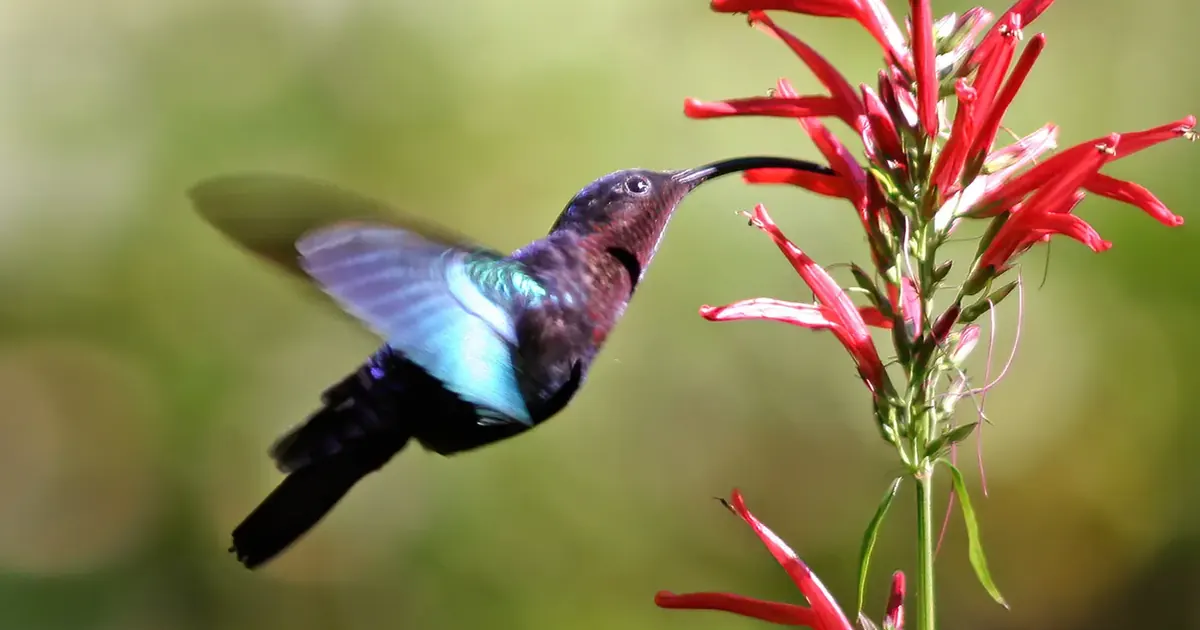
Hummingbirds are easy to find in gardens and forest edges: the purple-throated carib lives on Dominica, as do other species. Heliconias, the red and orange flowers that hummingbirds feed on, are common in tropical forests, and tree ferns grow in damp mountain forest. A walk through the Roseau Botanic Gardens is an easy way to see plants and lizards together.
Are there dangerous animals in Dominica?
Our sources describe no dangerous land animals on the island. The more practical hazards are slippery trails, fast rivers after rain, strong sun and sea conditions. Keep your distance from all wildlife, never feed it, and ask a guide about anything you are unsure of.
Frequently Asked Questions
Endemic animals include the Dominican anole, the Dominican ground lizard, the Dominican boa, the Dominican blind snake and two parrots, the Sisserou and the Jaco. Many are shy, so a guided walk in forest or a visit to the botanic gardens gives the best chance.
Four snake species have been recorded, two of them endemic: the Dominican boa and the Dominican blind snake. Sightings are uncommon. Treat all wildlife with respect, keep your distance and ask a local guide if you are unsure about anything you see.
Yes. A group of sperm whales lives in the area year-round, so boat trips run throughout the year, from the west coast. Sightings cannot be promised, so choose an operator that keeps a respectful distance and allow time for the sea to deliver.
No. It is a large frog, called the crapaud on Dominica, and it is critically endangered after a steep decline linked to disease and other pressures. Only a tiny wild population remains, so you are very unlikely to see one on an ordinary visit.
For more guides to Dominica island, read the journal.
How we prepared this guide: Main sources: Wikipedia. The facts come from Wikipedia entries for Dominica, the Dominican anole, the mountain chicken and the Lesser Antillean iguana. We would value a local wildlife specialist’s review. Photographs are from Wikimedia Commons; see our photo credits.